
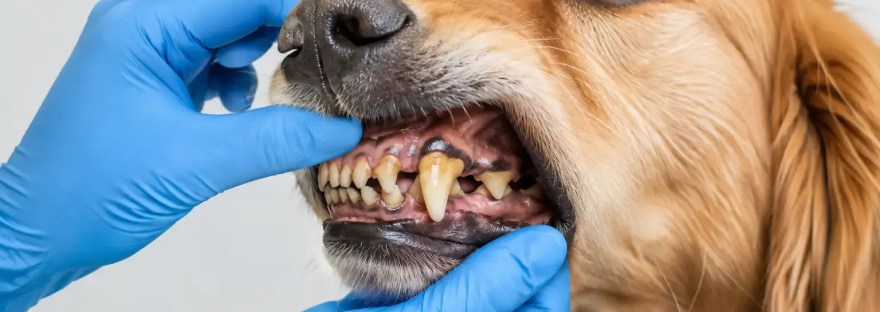
A little yellowing on a back tooth can be easy to dismiss. Thick brown crust climbing up several teeth, angry red gums and breath that makes you turn away are different. These are examples of severe dog tartar that may signal much more than a cosmetic problem. For many dogs, this build-up comes with sore gums, infection and difficulty eating long before an owner realises how uncomfortable their mate has become.
Tartar does not simply sit on the tooth. It gives bacteria a rough surface to cling to, particularly around the gumline. Left there, it can drive periodontal disease, loosen teeth and place ongoing inflammatory stress on the body. That is why a close look at your dog’s mouth is an act of care, not vanity.
What severe dog tartar can look like
Healthy teeth are usually off-white rather than paper white, and mild staining alone is not always an emergency. Severe tartar is more obvious. It is hard, mineralised plaque that may look yellow, tan, dark brown or almost black. Unlike soft plaque, it will not brush away at home.
A thick collar at the gumline
One of the clearest examples is a heavy, raised band of brown or yellow material where the tooth meets the gum. It may cover a third, half or most of the visible tooth, especially on the upper back teeth and large canine teeth. From the side, the tooth can look as though it has been coated in cement.
This is a common pattern because saliva and food debris collect around these areas. The concern is not only what you can see. Tartar at the gumline can extend beneath the gums, where bacteria irritate tissues that support the teeth.
Teeth that look brown from base to tip
When several teeth are covered in a thick, rough layer rather than a small patch near the base, the build-up is likely well established. Some owners mistake this for natural tooth colour, particularly in older dogs. Age can bring staining, but heavy brown deposits are not a normal part of growing older.
A dog may still eat kibble, carry a toy and wag their tail with this level of tartar. Dogs are remarkably good at carrying on despite oral pain. Behaviour alone is not a reliable measure of dental comfort.
Red, swollen or bleeding gums
Severe tartar is often accompanied by gums that are bright red, puffy or receding away from the teeth. You may see bleeding after chewing a hard treat or notice a red line where the gum meets the tooth. In advanced cases, the gums can look uneven, sore and visibly infected.
Bleeding gums are not something to watch for a few more months. They need attention, especially alongside heavy tartar, bad breath or reluctance to let anyone near the mouth.
Loose teeth, missing teeth or exposed roots
When periodontal disease progresses, the tissues and bone holding a tooth in place can be damaged. A tooth may appear longer because the gum has receded, move when the dog chews, or fall out. A missing tooth is not always visible from the front, so an unpleasant smell, dropping food or chewing on one side can be useful clues.
This is beyond a surface-cleaning issue. A veterinary assessment is needed to determine whether there is infection below the gumline, pain requiring treatment, or a tooth that needs extraction.
Signs that tartar may already be hurting your dog
The mouth can look confronting, but the smaller changes at home often matter just as much. Persistent foul breath is a common warning sign. It is not normal for a dog’s breath to smell rotten, metallic or strong enough to fill the room.
Watch for changes in eating too. Your dog may approach the bowl eagerly but chew slowly, drop biscuits, favour one side of the mouth, swallow food without chewing or stop enjoying toys they once loved. Some dogs become quiet, pull away when their face is touched, paw at their mouth or rub their muzzle along the carpet.
Other possible signs include excess drool, blood on toys, reduced interest in dry food and a change in mood. These signs can have causes other than dental disease, but they are never worth brushing off. Dogs cannot tell us that a molar aches every time they bite down. We need to notice the clues.
Why severe tartar deserves prompt action
The visible crust is only part of the issue. Bacteria around diseased gums can enter the bloodstream, and chronic oral inflammation has been associated with wider health concerns involving the heart, kidneys and liver. A clean mouth supports more than fresh breath – it supports a better quality of life.
There is also a practical reason to act early. Mild to moderate surface build-up is generally simpler to manage than advanced dental disease. Once teeth are loose, roots are affected or infection is suspected, the path can involve more extensive veterinary treatment, anaesthesia and recovery time.
That does not mean every brown tooth needs the same response. The right care depends on what is happening beneath the gumline, your dog’s comfort, their temperament and their overall health. A careful provider will not promise that every mouth can be managed with a routine clean.
When an anaesthesia-free clean may help – and when it cannot
For suitable dogs with visible plaque and tartar but no signs of advanced disease, professional anaesthesia-free dental cleaning can be a practical preventive option. It allows an experienced handler to clean accessible tooth surfaces while keeping a cooperative dog comfortable and supported. There is no anaesthetic recovery period, which can be especially appealing for nervous, ageing or sensitive dogs.
At Fresh Breath Doggie Dental, the focus is on preventive hygiene, calm handling and helping owners recognise changes before they become bigger problems. With 26 years of hands-on experience, we know that trust matters. Some dogs need time, patience and a gentle, confident approach before they will allow their mouth to be checked.
But there are limits, and they matter. An anaesthesia-free clean cannot treat disease under the gums, remove a damaged tooth, take dental X-rays or safely address a painful, unstable mouth. If your dog has loose teeth, severe gum bleeding, facial swelling, obvious pain, discharge, a broken tooth or refuses mouth handling because they are distressed, veterinary care should come first.
This is not a failure of preventive cleaning. It is the responsible distinction between maintaining a healthy mouth and treating established disease. The best outcome for your dog is always the one that matches their clinical needs.
What to do if you see severe tartar
Start by taking a clear look when your dog is relaxed. Lift the lip gently rather than forcing their mouth open. Check the upper back teeth, canines and gumline for hard deposits, redness, swelling or bleeding. A quick photo in good light can help you track changes over time, although photographs cannot show what is happening below the gumline.
Do not scrape tartar off with metal tools at home. You could cut the gums, damage enamel or frighten your dog, making future care more difficult. Dental chews and brushing can be useful for maintenance, but they will not remove established, rock-hard tartar.
If the build-up looks heavy but your dog is settled and has no signs of pain, arrange a professional assessment to find out whether preventive cleaning is appropriate. If there is bleeding, swelling, loose teeth, intense odour, eating changes or discomfort, contact your veterinarian promptly. Early action can spare your dog months of quiet pain.
Your dog does not need to tolerate a sore mouth simply because they are still eating. A cleaner, healthier mouth can mean easier meals, happier cuddles and more of the bright, comfortable life they deserve.
